21Sep

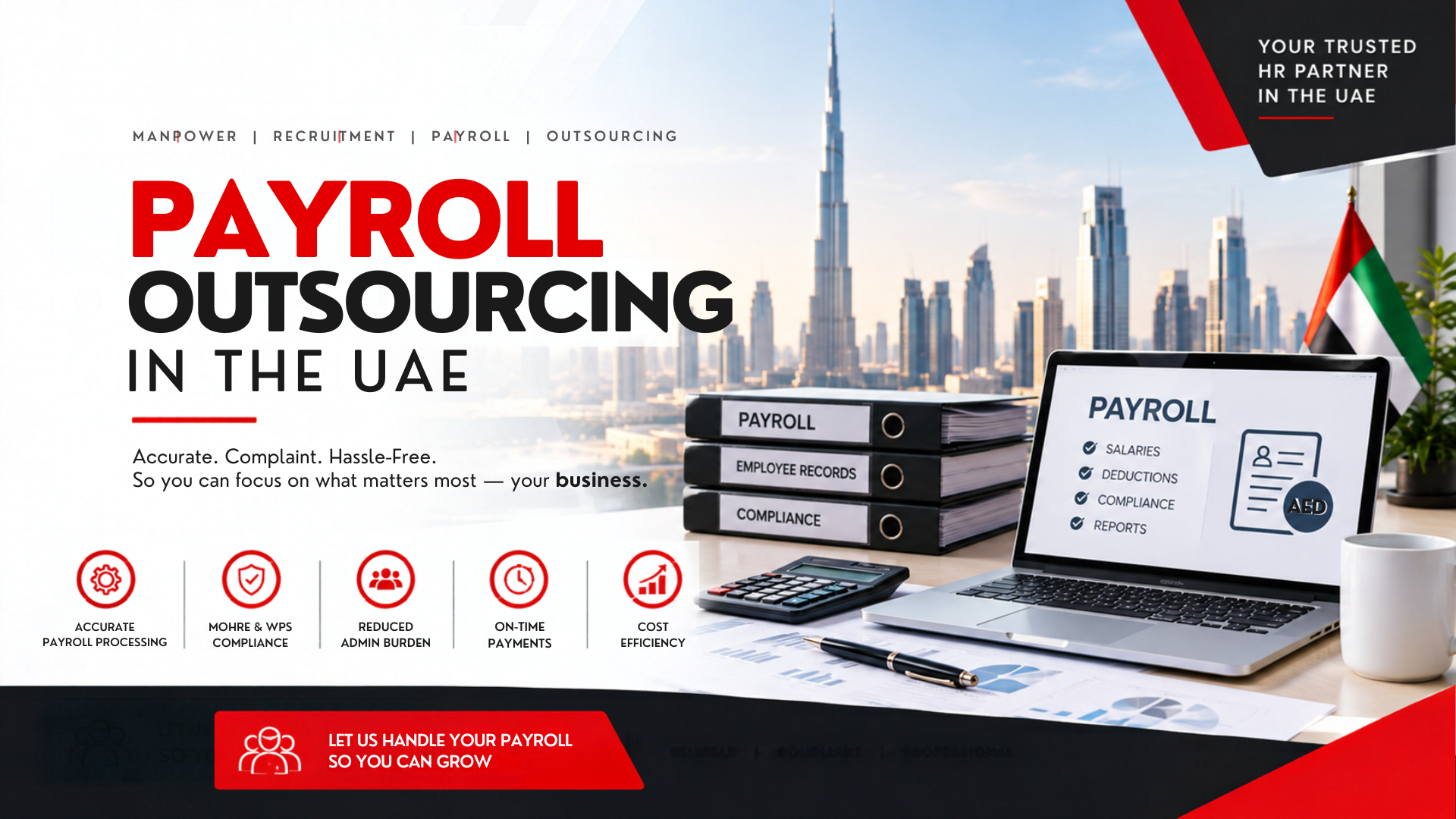
Payroll in the UAE is more than calculating salaries at month-end. Employers have to keep employee data accurate, track attendance and leave, pay wages through the Wage Protection System (WPS) and keep records that stand up to scrutiny. Since 1 June 2026, the margin for error has narrowed.

Under Ministerial Resolution No. 340 of 2026, wages for the previous month are due on the first day of each month, and the 15-day grace period many employers relied on no longer exists. A payroll run that lands a few days late is now a compliance issue, not just an inconvenience. That is why more companies are looking at payroll outsourcing in the UAE. This guide explains how it works, what has changed with WPS, and how to decide whether it suits your business.

What Is Payroll Outsourcing?

Payroll outsourcing means handing some or all of your payroll responsibilities to an external provider. Depending on the agreement, that can cover salary calculations, attendance and leave records, WPS salary file preparation, payslips and payroll reports. Some providers also handle onboarding, visa administration and wider HR support.

The scope is set by the service agreement. Many companies keep recruitment and employee relations in-house and outsource only the processing and administration.

WPS in 2026: What Employers Need to Know

WPS is the electronic salary transfer system for private-sector employers registered with the Ministry of Human Resources and Emiratisation (MoHRE). Wages are paid through banks, exchange houses and financial institutions authorised by the Central Bank of the UAE, which allows the Ministry to monitor whether employees are paid correctly and on time. Ministerial Resolution No. 340 of 2026 replaced Resolution No. 598 of 2022 and tightened the framework from 1 June 2026:

One due date. Wages for the previous month are due on the first day of each Gregorian month. Anything paid later is treated as delayed.

No grace period. The former 15-day window has been removed.

Higher compliance threshold. The threshold used to assess compliance has risen from 80% to 85% of wages due.

Faster escalation. Delays can lead to suspended work permits, administrative fines and, in persistent cases, further legal action.

In practice, payroll cut-off dates, approvals and bank processing times now need to be planned backwards from the 1st. Payroll is no longer an internal spreadsheet exercise. This is a general summary, not legal advice. Check current MoHRE guidance for how the rules apply to your establishment.

Why Businesses Outsource Payroll

With ten employees, payroll is manageable. With two hundred across several sites, each with different allowances, overtime, leave balances and deductions, and with people joining and leaving mid-month, it becomes a significant monthly workload.

Less repetitive administration. HR and finance teams stop spending days each month preparing files and checking calculations. This matters most for companies without a dedicated payroll department.

Fewer errors. Established procedures and systems reduce avoidable manual mistakes. Accurate inputs and approvals from your side still matter.

Deadlines met. A fixed monthly cycle, built around the 1st-of-month due date, reduces the risk of late WPS payments.

Continuity. Payroll does not stall when one key person is on leave or resigns.

HR time back. Your team can focus on recruitment, workforce planning, engagement and retention.

What Services Can Be Included?

Packages vary between providers, so never assume two payroll companies offer the same scope. Typical services include:

• Salary calculation and processing

• WPS salary file preparation and processing support

• Attendance and timesheet management

• Leave administration

• Payslips and payroll reports

• Employee data maintenance

• Onboarding and offboarding administration

• End-of-service gratuity and leave settlement calculations Payroll can also be combined with visa administration, employee outsourcing or other workforce services under a broader HR outsourcing arrangement.

In-House or Outsourced?

Managing payroll internally gives you direct control, and it works well when you have an experienced team, suitable software and enough capacity. When comparing options, look beyond the provider’s fee versus one employee’s salary. Include software, staff time, error correction, cover during absences and the senior management time spent resolving payroll issues. Outsourcing is worth considering when:

• Your workforce is growing quickly or spread across multiple sites

• You are a new business and not ready to hire a payroll specialist

• Your HR team is stretched and payroll takes up a large part of every month

• Your current process struggles to meet the 1st-of-month deadline

• Management wants better visibility of salary costs and headcount

A smaller company with a simple payroll structure and a capable finance or HR team may be perfectly well served in-house. The decision should follow your workforce size, payroll complexity and internal resources.

How to Choose a Payroll Outsourcing Company in the UAE

• UAE payroll knowledge. The provider should understand UAE labour law and the requirements that apply to your workforce.

• WPS track record. Ask who prepares and submits the salary file, how deadlines are managed and which responsibilities stay with you.

• Data security. Payroll data is sensitive. Understand how it is stored, processed and protected.

• A defined approval process. There should be a clear way to submit employee changes and approve payroll before it is processed.

• Clear reporting. Management should be able to see exactly what was processed in each cycle.

• Responsive support. Payroll queries are time-sensitive. You need answers in hours, not days.

• Scalability. The provider should be able to grow with you, so you are not forced to switch later.

How Stallion HR Solutions Can Help

Stallion HR Solutions has supported UAE employers since 1996 and is licensed by MoHRE. We provide WPS payroll and HR outsourcing alongside visa services, manpower supply, contract and temporary staffing, recruitment process outsourcing, and Emiratisation and Nafis support. Every engagement starts with scope: your workforce size, your payroll structure and the responsibilities you want to keep. From there we set up a clear monthly cycle of inputs, approval, processing and reporting, built around the 1st-of-month deadline.

Frequently Asked Questions

Is WPS mandatory in the UAE? Private-sector establishments registered with MoHRE must pay wages through WPS or another Ministry-approved system. The Resolution exempts certain categories, and some free zones operate their own arrangements, so check with your authority.

When are salaries due under the new rules? On the first day of each Gregorian month, for the preceding month. Payments after that date are treated as delayed.

Does outsourcing payroll transfer my legal responsibility? No. The employer remains responsible for paying wages on time. The provider manages the process agreed in the contract, which is why a clearly defined scope matters.

How much does payroll outsourcing cost? It depends on headcount, payroll complexity and the services included. Most providers price per employee per month.

Final Thoughts

Payroll goes unnoticed when it works and becomes very visible when it is late or wrong. With a single monthly due date and no grace period, UAE employers need a process they can rely on every month. Looking to simplify payroll and WPS compliance? Contact Stallion HR Solutions at info@stallion-intl.com or request a consultation at Stallion HR Solutions.
08Sep

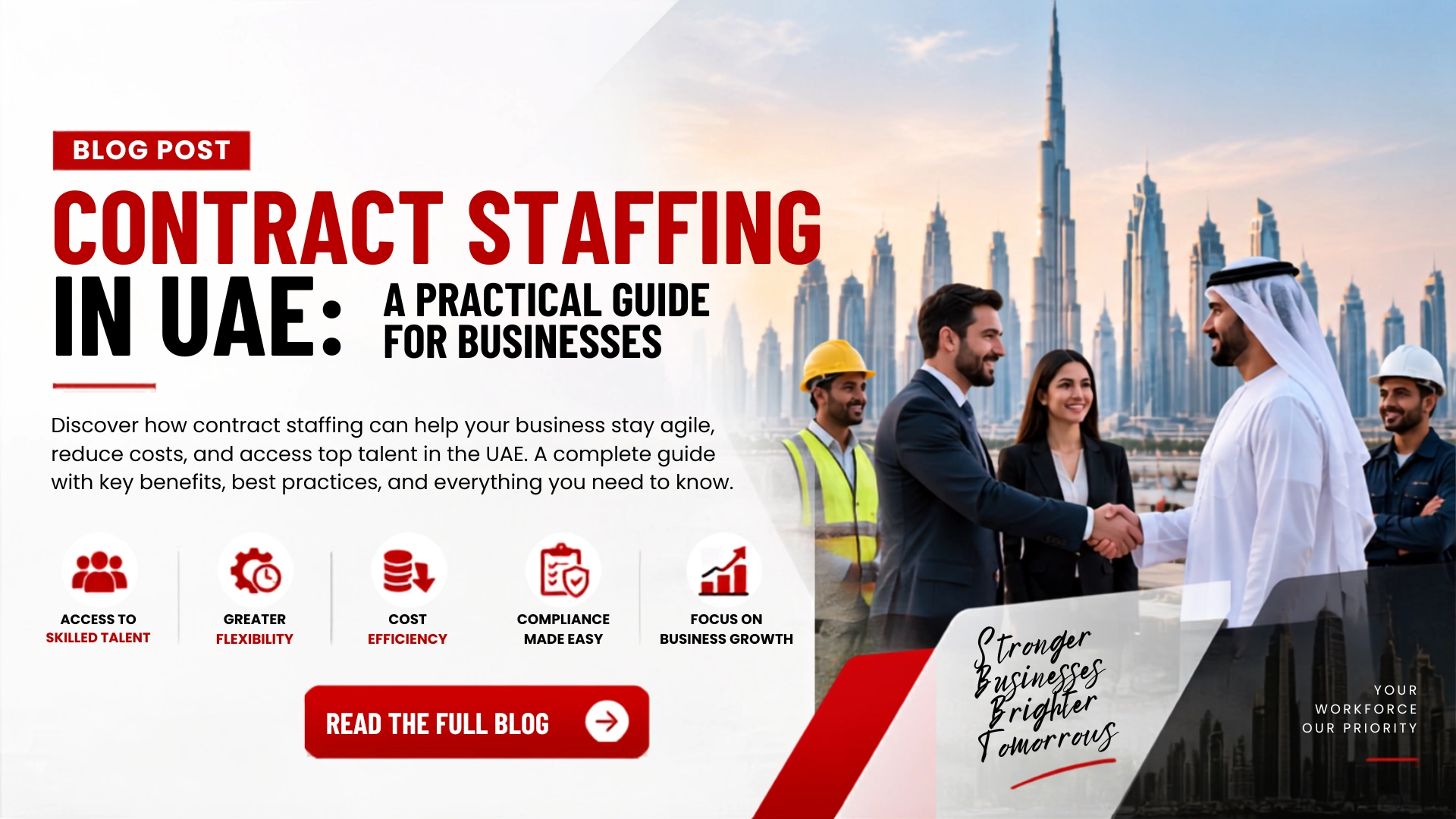
Hiring doesn’t always mean making a permanent commitment. Businesses in the UAE often need additional employees for a specific project, a period of increased demand, a new business launch, or to cover temporary workforce gaps. In these situations, contract staffing in the UAE can provide a practical and flexible hiring option.

Instead of recruiting every employee as a permanent member of the organization, companies can use contract staffing to bring in people for a defined period or a specific business requirement. This can help organizations respond to changing workforce needs while keeping their hiring strategy more flexible.

Contract staffing can be particularly useful for industries such as construction, logistics, hospitality, manufacturing, facilities management, technology, engineering and other sectors where workforce requirements can change according to projects and operational demand.

What Is Contract Staffing in UAE?

Contract staffing is an arrangement where a worker is engaged for a defined period or assignment rather than as a conventional permanent hire. Depending on the staffing model, a licensed staffing provider may handle certain employment and administrative responsibilities while the employee performs their day-to-day work for the client.

In the UAE, temporary employment and outsourcing are regulated activities. The Ministry of Human Resources and Emiratisation defines temporary employment and outsourcing as an arrangement in which an employment agency employs a worker with the intention of making that worker available to a third party for a specific period, task or service.

This distinction is important for employers because contract staffing is not simply about hiring someone for a few months. The company and staffing provider should clearly understand the employment structure, responsibilities and applicable requirements before the assignment begins.

Why Businesses Use Contract Staffing

The main attraction of contract staffing is flexibility.

Business requirements can change quickly. A company may win a major project and suddenly need additional employees. Another company may open a new facility and require temporary support during the initial phase. A logistics operation may experience an increase in workload, while a business going through a transformation may need specialist professionals for a limited period.

Permanent recruitment can still be the right answer for long-term positions, but it is not always the best solution for every workforce requirement.

Contract staffing gives businesses another option. They can bring in the people they need for a defined period and review their workforce requirements as the business develops.

Flexibility During Business Growth

Growing businesses often do not know exactly how their staffing requirements will look several months later. Hiring contract employees can help companies increase workforce capacity while they evaluate longer-term needs.

This can be particularly useful during expansion into a new location, the launch of a new service or the opening of a warehouse, facility or project.

Support for Project-Based Work

Many UAE businesses operate around projects with clear start and completion dates. Construction, engineering, infrastructure, technology implementation and industrial projects are good examples.

A project may require certain specialists during one stage and completely different skills during another. Contract staffing can make it easier to build a workforce around the actual project timeline.

Managing Temporary Workforce Gaps

Businesses can experience unexpected vacancies when employees leave, take extended leave or become unavailable. Leaving a position empty for a long period can affect productivity.

A contract employee can provide temporary support while the company decides whether to recruit a permanent replacement.

Access to Specialist Skills

Not every business needs every skill permanently. A company may require an experienced professional to support a defined assignment but have little reason to maintain that position after the project is completed.

Contract staffing can provide access to specialist skills without automatically turning a temporary requirement into permanent headcount.

Contract Staffing vs Permanent Hiring

The choice between permanent hiring and contract staffing should be based on the nature of the role.

Permanent hiring is generally more appropriate when a company expects the position to remain part of its long-term structure. It is common for ongoing management, finance, HR, administration and other core functions.

Contract staffing is often more appropriate when the requirement is linked to a particular project, a temporary increase in workload, a business transition or specialist assignment.

For example, a company may permanently employ a finance manager because financial management is a continuous business function. The same company may use a contract project specialist to support the implementation of a new financial system for several months.

The decision should therefore start with the business requirement rather than the employment model.

Which Industries Use Contract Staffing in UAE?

Contract staffing is not limited to a particular industry. Different sectors use flexible workforce models for different reasons.

Construction and Engineering

Construction companies frequently operate around projects with defined schedules and changing workforce requirements. A company may need engineers, technicians, supervisors, skilled trades, or support staff during particular project stages.

For businesses looking for contract staffing in the UAE for construction projects, having access to a flexible workforce can make planning easier as project requirements change.

Logistics and Warehousing

The logistics sector can experience significant changes in operational volume. New contracts, warehouse openings and seasonal activity can all increase staffing requirements.

Contract staffing can support warehouse operations, logistics coordination, supervision and other operational roles when additional capacity is required.

Hospitality

Hotels, restaurants, catering businesses and event companies may experience periods when staffing requirements increase considerably. Contract and temporary staffing can provide additional workforce capacity without making every additional role permanent.

Manufacturing and Industrial Operations

Manufacturing companies may require additional production, maintenance, technical or operational employees when production schedules increase or new projects are introduced.

Facilities Management

Facilities management businesses may need employees for particular contracts, sites or service periods. Flexible staffing can help companies align workforce numbers with contract requirements.

Technology and Professional Services

Contract staffing is also used for specialist professional roles where expertise is required for a defined project or period. This can include technology implementation, transformation programmes, project management and other specialized assignments.

What Is the Difference Between Contract Staffing and Temporary Staffing?

The terms are often used together, but there can be differences depending on how a staffing provider defines its services.

Contract staffing generally refers to engaging an employee under a defined contract period or assignment. Temporary staffing also focuses on short-term workforce requirements, but the length and structure can vary.

In practice, employers should focus less on terminology and more on the actual arrangement. They should understand how long the assignment will last, who employs the worker, who manages payroll, what responsibilities belong to the client and what services the staffing provider will deliver.

The applicable legal and employment framework should always be considered when establishing the arrangement.

How Does Contract Staffing Work?

The process usually begins with the employer explaining its workforce requirement.

The company should provide information about the position, responsibilities, required experience, qualifications, location, expected start date, number of employees and contract duration.

The staffing provider can then source and screen candidates according to the agreed requirements.

Depending on the role, the selection process may include interviews, qualification checks, reference checks, technical assessments or other forms of evaluation.

Once a candidate is selected, the parties complete the necessary employment and on boarding processes according to the agreed staffing model.

Depending on the service arrangement, the staffing provider may also support payroll, documentation, visa-related processes and ongoing employee administration.

The responsibilities should be clearly defined before the employee begins work. This reduces confusion and makes the relationship easier to manage throughout the assignment.

How Contract Staffing Can Help Reduce Hiring Pressure

Recruiting a workforce requires time and internal resources. HR teams may need to advertise positions, review applications, conduct interviews, arrange documentation, and coordinate onboarding.

When the business needs several employees simultaneously, this workload can become substantial.

A contract staffing agency in the UAE can provide additional recruitment capacity and help businesses manage a portion of the hiring process externally.

This does not mean the client gives up control of its hiring decisions. In many arrangements, the client remains closely involved in defining job requirements, interviewing candidates, and deciding who is suitable for the role.

The staffing provider becomes an additional resource that helps the company manage workforce requirements more efficiently.

Important Compliance Considerations

Contract staffing should always be approached with compliance in mind.

The UAE regulates employment agencies and temporary employment and outsourcing activities. MoHRE provides a specific licensing process for recruitment and temporary employment agencies, including temporary employment and outsourcing activities.

This means businesses should work with appropriately licensed providers and understand the legal structure of the staffing arrangement.

Payroll is another important consideration. Employers should ensure that wage payments are handled according to applicable UAE requirements, including relevant Wage Protection System obligations where applicable.

It is also important to clarify responsibility for employee records, employment documentation, work authorization and other administrative requirements before workers are deployed.

For businesses, compliance should be part of the decision-making process from the beginning rather than something checked after hiring has already started.

How Much Does Contract Staffing Cost in UAE?

There is no universal price for contract staffing in the UAE.

Costs can vary considerably based on the position, experience level, contract duration, salary, number of employees, location, and services included in the staffing arrangement.

For example, the cost structure for hiring a specialized engineer will be very different from hiring warehouse or operational staff.

Businesses should therefore request a detailed quotation based on their actual requirements rather than relying on a generic advertised price.

A good quotation should make the commercial structure clear and explain what services are included.

How to Choose a Contract Staffing Company in Dubai

Choosing the right provider requires more than comparing prices.

First, check whether the provider is properly licensed for the services it offers. MoHRE maintains processes governing recruitment and temporary employment and outsourcing agencies in the UAE.

Next, look at recruitment capability. Ask how candidates are sourced, screened and evaluated.

Industry experience should also be considered. A provider supporting construction or industrial projects will need to understand different workforce requirements from a provider focused mainly on office-based positions.

It is also important to discuss deployment timelines, payroll arrangements, documentation, employee support and the responsibilities of both parties.

Finally, communication matters. A staffing relationship works better when the client and provider have clear communication throughout recruitment, on boarding and the assignment.

When Is Contract Staffing the Right Choice?

Contract staffing can be a good option when a business has a genuine temporary or project-based workforce requirement.

It can make sense when the company is starting a new project, experiencing seasonal demand, expanding operations or needs specialist expertise for a specific period.

It may be less suitable when the business already knows that the role is a permanent and long-term part of its organization.

The objective should not be to make every hire temporary. The objective is to choose a workforce model that matches the actual business need.

Contract Staffing with Stallion HR Solutions

Stallion HR Solutions provides staffing and workforce solutions for businesses across the UAE.

Our services include contract staffing, temporary staffing, manpower supply, recruitment process outsourcing, Emiratisation and Nafis support, visa services and WPS payroll solutions.

We work with businesses that require workforce support for projects, temporary requirements and ongoing operations. Our approach starts with understanding the client’s actual requirement, including the type of employees needed, experience, workforce volume, location and expected duration.

Stallion can support businesses across a variety of sectors, including construction, logistics, hospitality, manufacturing, facilities management, marine and other operational industries.

Rather than treating every staffing requirement in the same way, the goal is to develop a workforce solution that fits the company’s operational needs.

Final Thoughts

The workforce requirements of a business can change as quickly as the business itself. A new project can create an immediate need for additional staff, while changing demand can make a permanent hiring plan difficult to maintain.

Contract staffing in the UAE gives businesses another way to manage these situations. It can provide access to professionals and operational staff for defined periods while giving employers greater flexibility around workforce planning.

The key is choosing the right staffing model and working with a provider that understands recruitment, compliance, and workforce administration.

For UAE businesses looking for a flexible hiring solution, Stallion HR Solutions provides contract staffing and broader workforce solutions designed around individual business requirements.Need contract staff for your next project or business requirement? Contact Stallion HR Solutions to discuss your staffing needs.

31Aug

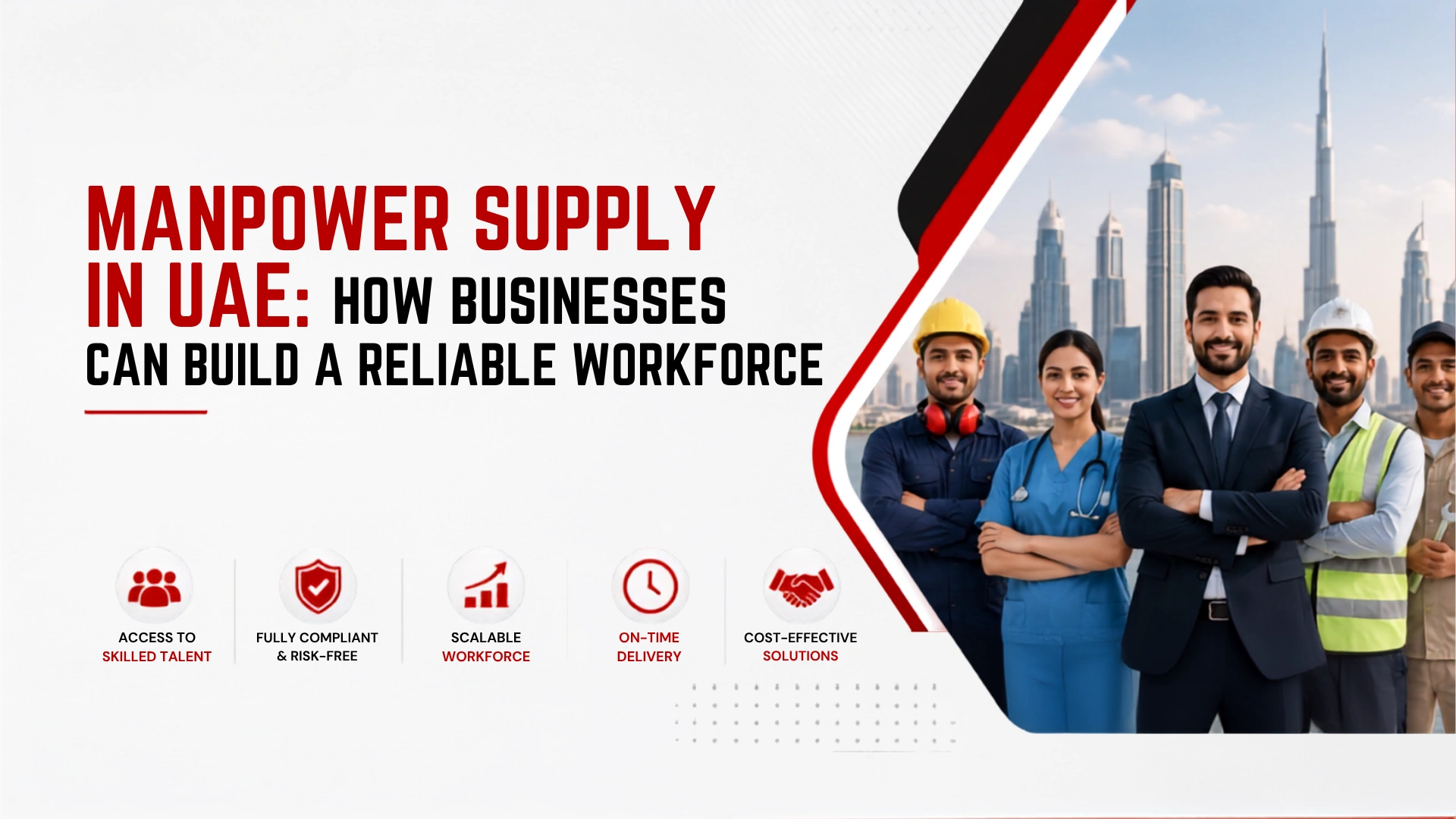
Finding reliable manpower in the UAE can be challenging when a business needs workers quickly, launches a new project, experiences seasonal demand or expands its operations. Recruiting a large workforce internally can also place significant pressure on HR teams, especially when businesses need to source, screen, document and manage multiple employees at the same time.

A professional manpower supply company in the UAE can help businesses access skilled, semi-skilled and unskilled workers according to their operational requirements. Depending on the service arrangement, manpower providers can also support recruitment, onboarding, workforce administration, payroll and other HR-related processes.

For companies operating in construction, logistics, hospitality, facilities management, manufacturing, oil and gas, aviation, healthcare and other industries, having access to a flexible workforce can make it easier to respond to changing business requirements.

Stallion HR Solutions provides manpower and workforce solutions for businesses across the UAE, helping companies address their staffing requirements through manpower supply, contract staffing, temporary staffing, recruitment, HR outsourcing and payroll-related services.

What Is Manpower Supply in the UAE?

Manpower supply is a workforce solution that allows businesses to obtain workers through an authorized manpower or staffing provider according to an agreed service arrangement. The exact employment and outsourcing structure depends on the applicable contract and UAE regulatory requirements.

Unlike traditional recruitment, which is generally focused on filling individual vacancies, manpower supply can support businesses that need multiple workers for a project, temporary requirement, seasonal operation or ongoing business activity.

A manpower supply company may support different stages of the workforce process, including candidate sourcing, screening, documentation, deployment and workforce administration, depending on the agreed scope of services.

This makes manpower supply particularly useful for businesses that need to increase or reduce their workforce according to project requirements without building a large internal recruitment operation.

Why Businesses in the UAE Use Manpower Supply Companies

UAE businesses operate in a highly competitive and fast-moving environment. Workforce requirements can change quickly because of new projects, seasonal demand, business expansion, or unexpected employee shortages.

Working with a professional manpower provider can give businesses greater flexibility when responding to these changes.

Faster Workforce Deployment

When a company suddenly needs additional workers, starting the recruitment process from zero can take considerable time. A professional manpower provider with an established sourcing network can help identify candidates according to the required job roles and workforce requirements.

This can be particularly valuable for companies working on projects with strict deadlines where delays in workforce deployment can affect overall operations.

Access to Skilled and Semi-Skilled Workers

Different industries require different types of workers. Depending on the requirement, businesses may need electricians, plumbers, HVAC technicians, mechanics, welders, drivers, machine operators, warehouse workers, maintenance assistants, general workers or supervisors.

A manpower supply company can help businesses source workers according to specific job descriptions, experience requirements and operational needs.

Flexible Workforce Scaling

Workforce requirements are rarely constant.

A construction company may require a larger workforce during a particular stage of a project and fewer workers after completion. A logistics company may need additional warehouse employees during periods of increased activity. Hospitality businesses may also experience seasonal changes in staffing requirements.

Flexible manpower solutions allow businesses to adjust workforce levels according to their operational needs.

Reduced HR Administration

Managing a large workforce involves more than recruitment. Businesses may also need to handle documentation, onboarding, payroll, employee records, and other administrative responsibilities.

Depending on the agreed service model, an HR outsourcing or manpower provider can support some of these functions, reducing the administrative workload for the client’s internal HR team.

Better Workforce Planning

Professional manpower solutions can also help businesses plan their workforce more effectively.

Instead of reacting to staffing shortages at the last minute, companies can discuss expected workforce requirements in advance and plan staffing according to project timelines, operational demand and required job categories.

Types of Manpower Available in the UAE

Manpower requirements differ from one company to another. A professional workforce provider should be able to understand the client’s requirements before recommending suitable staffing solutions.

Skilled Manpower

Skilled workers have specialized knowledge, training, or experience relevant to their particular trade or occupation.

Examples can include:

  • Electricians
  • Plumbers
  • HVAC technicians
  • Welders
  • Mechanics
  • Technicians
  • Drivers
  • Machine operators
  • Supervisors
  • Skilled maintenance personnel

The exact qualifications, certifications, and experience required depend on the position and industry.

Semi-Skilled Manpower

Semi-skilled workers can support operational activities that require some practical knowledge, training or previous experience.

Examples include:

  • Warehouse assistants
  • Production assistants
  • Maintenance assistants
  • Site assistants
  • Logistics workers
  • General operational support staff

These roles can be particularly important for businesses that need additional operational support without requiring every position to be highly specialized.

Unskilled Manpower

Unskilled or general labour roles can support basic operational activities across different industries.

Examples may include:

  • General workers
  • Helpers
  • Loaders
  • Cleaners
  • Site support workers
  • Basic warehouse support staff

The appropriate workforce category depends on the actual responsibilities of the position.

Industries That Use Manpower Supply Services in the UAE

Manpower supply is not limited to one industry. Businesses across the UAE use workforce solutions to manage different operational and project requirements.

Construction and Infrastructure

Construction companies often need workers across different stages of a project. Requirements can range from general labour and skilled trades to technicians, supervisors and site-support personnel.

A reliable construction manpower supply company in the UAE can help contractors manage workforce requirements as projects progress.

Logistics and Warehousing

The logistics industry depends heavily on operational manpower. Warehouses and distribution operations may require workers for picking, packing, loading, unloading, inventory support and other activities.

Businesses searching for warehouse manpower supply in Dubai may benefit from flexible staffing solutions that can adapt to changing operational volumes.

Hospitality and Catering

Hotels, restaurants, catering companies and event businesses can experience significant changes in workforce demand.

Temporary and flexible staffing can help hospitality businesses manage periods of increased activity while maintaining operational continuity.

Facilities Management

Facilities management companies may require cleaning staff, maintenance workers, technicians, and other operational personnel to support commercial and residential properties.

Oil and Gas and Energy

Energy-related projects can require specialized technical and operational personnel. Workforce requirements can also change according to project stages and contract requirements.

Manufacturing and Industrial

Factories and industrial businesses may require production workers, technicians, machine operators, maintenance personnel and other staff to support daily operations.

Aviation

Aviation and airport-related operations can require employees across technical, operational, logistics and support functions, depending on the specific organization and role.

Healthcare

Healthcare organizations may require qualified professionals and support personnel depending on their operational requirements and applicable regulatory standards.

Manpower Supply vs Recruitment: What’s the Difference?

Although manpower supply and recruitment are related, they are not necessarily the same service.

RecruitmentManpower Supply
Usually focused on filling specific vacanciesCan provide a workforce for projects or ongoing requirements
Often focused on individual candidatesCan involve multiple workers
Commonly used for permanent positionsCan support temporary, project-based or flexible requirements
Client may manage most employment administrationProvider may support agreed workforce administration
Suitable for direct hiringSuitable for flexible workforce arrangements

The exact employment relationship and responsibilities depend on the service model and applicable UAE regulations.

When Should a UAE Business Consider Manpower Outsourcing?

Manpower outsourcing can be useful when a company needs workforce flexibility or additional HR support.

Starting a New Project

Businesses launching construction, logistics, manufacturing, or other projects may need additional workers within a limited timeframe.

Experiencing Rapid Growth

When a company expands quickly, its internal HR team may struggle to recruit and onboard workers at the required speed.

Managing Seasonal Demand

Some businesses experience predictable periods when workforce requirements increase. Temporary staffing can provide additional support during these periods.

Dealing With Workforce Shortages

Unexpected employee departures or operational changes can create staffing gaps. A manpower provider can help businesses address these requirements.

Reducing Internal HR Workload

Companies that want their HR team to focus on strategic activities may outsource selected recruitment or workforce administration functions.

What Does a Manpower Supply Company Handle?

The services provided vary between companies and contracts, but a workforce provider may support several stages of the staffing process.

Workforce Requirement Analysis

The process starts by understanding the client’s required positions, number of workers, skills, experience, and deployment timeline.

Candidate Sourcing

Candidates can be sourced through recruitment networks, databases, referrals, partner agencies and other appropriate channels.

Screening and Shortlisting

Candidates are reviewed according to the requirements provided by the client.

Trade Testing Where Required

For technical and skilled positions, trade testing or other forms of assessment may be appropriate depending on the role.

Documentation

Workforce deployment can involve documentation and employment-related requirements that need to be managed according to the applicable regulations and service arrangement.

Onboarding and Deployment

Once suitable candidates are selected and the required processes are completed, workers can be prepared for deployment.

Payroll and HR Support

Depending on the agreement, workforce providers may also support payroll, employee administration and related HR services.

How to Choose a Manpower Supply Company in the UAE

Choosing a manpower provider based only on the lowest price can create problems later. Businesses should evaluate the provider’s capabilities, compliance standards and ability to deliver the required workforce.

Licensing and Compliance

Work with a properly licensed provider and understand how the proposed workforce arrangement complies with applicable UAE requirements.

Recruitment Capability

Ask how the company sources, screens, and evaluates candidates.

Industry Experience

A provider experienced in construction manpower may have a different recruitment network and process from one specializing primarily in office recruitment.

Deployment Capability

Ask how quickly the company can respond to your workforce requirements and whether it can handle urgent or large-volume staffing requests.

Workforce Capacity

Consider whether the provider can support your current requirements and future expansion.

HR and Payroll Support

Clearly understand which HR, payroll, visa, or administrative services are included in the agreement.

Worker Welfare

Worker welfare should not be treated as an afterthought. Proper accommodation, transportation, documentation, payroll and working conditions can directly affect workforce stability and business operations.

Why Compliance Matters When Outsourcing Manpower in the UAE

Compliance is an important part of workforce management.

Businesses should ensure that employment arrangements, documentation, work authorization, payroll processes and employee records are handled according to applicable UAE requirements.

The Wage Protection System (WPS) is an important component of UAE employment administration, supporting the electronic payment of wages through approved financial institutions. Businesses should ensure that their payroll processes meet the applicable requirements.

Because UAE labour and employment regulations can change, companies should obtain current guidance from the relevant authorities or qualified professionals when making legal or compliance decisions.

Manpower Supply for Short-Term vs Long-Term Projects

Different projects require different workforce strategies.

Short-Term Workforce

Short-term manpower can be useful for:

  • Seasonal demand
  • Events
  • Temporary replacements
  • Project peaks
  • Short-duration contracts
  • Temporary operational requirements

Long-Term Workforce

Long-term workforce solutions may be suitable for:

  • Ongoing construction projects
  • Facilities management
  • Logistics operations
  • Manufacturing
  • Hospitality
  • Warehousing
  • Industrial operations

The right solution depends on the company’s workforce requirements, project duration and agreed employment arrangement.

How Stallion HR Solutions Supports UAE Businesses

Stallion HR Solutions provides workforce solutions designed around the staffing requirements of UAE businesses.

Skilled, Semi-Skilled and Unskilled Workforce

Stallion can support businesses looking for different categories of manpower according to their operational requirements.

Flexible Staffing Solutions

Businesses can explore workforce solutions suited to project-based, temporary and ongoing staffing requirements.

Recruitment Support

Stallion supports candidate sourcing and recruitment for businesses looking to build or expand their workforce.

HR and Payroll Support

Depending on the service arrangement, businesses can also access HR outsourcing and payroll-related support.

Industry-Focused Workforce Solutions

Stallion supports workforce requirements across industries including construction, logistics, hospitality, facilities management, manufacturing, aviation, healthcare and other sectors.

End-to-End Workforce Support

From understanding workforce requirements and sourcing candidates to deployment and ongoing workforce administration, Stallion provides solutions designed to reduce the operational burden associated with workforce management.

04Jun

Introduction

Let’s be honest, hiring used to be simpler. You needed someone, you posted a job, interviewed a few candidates, and made a decision. That doesn’t work anymore.

Today, businesses are hiring across cities, countries, and time zones. Roles need to be filled faster, expectations are higher, and the cost of a bad hire is not something companies can afford to ignore. And somewhere in the middle of all this, internal HR teams are expected to keep everything running smoothly. That’s exactly why more companies are quietly turning to Recruitment Process Outsourcing. Not as a backup plan, but as a smarter way to grow.

So what is really changing in hiring

The biggest shift is not technology. It is pressure. Businesses are under pressure to grow quickly. Projects cannot wait. Clients do not wait. Revenue certainly does not wait.

But hiring still takes time. Sourcing candidates, screening, interviews, negotiations, and onboarding. It adds up. Now imagine doing all of this across different countries, each with its own rules, talent availability, and expectations. This is where things start breaking. Not because HR teams are not capable, but because the system is stretched.

Where RPO actually makes a difference

Recruitment Process Outsourcing is often explained in a very technical way. In reality, it is much simpler. It means you are no longer handling hiring alone.

Instead of building everything internally, you work with a partner who already has the network, the systems, and the experience to hire at scale. Companies like Stallion HR Solutions step in as an extension of your team, not just a vendor sending CVs. And that difference matters more than most people realize.

Speed becomes a real advantage

One of the first things businesses notice is how much faster hiring becomes. Not slightly faster. Noticeably faster.

Because you are no longer starting from zero every time a role opens up. There are already pipelines, already screened candidates, already people ready to move. For industries like construction or logistics, this can be the difference between meeting a deadline and missing an opportunity. And in fast-moving markets, speed is not just helpful. It is everything.

Hiring costs stop getting out of control

A lot of companies underestimate how expensive hiring actually is. Job portals, recruiter salaries, interview time, delayed projects, and wrong hires. These costs don’t always show up in one place, but they add up quickly. With RPO, things become more predictable.

You are not constantly spending on different channels or reacting to urgent hiring needs. There is a structure in place. A system that is designed to be efficient from the start. Over time, this brings costs down without compromising on quality.

Access to talent becomes wider, not harder

One of the biggest frustrations for companies is not finding the right people locally. Sometimes the talent just isn’t there. Sometimes it is too competitive. Sometimes it is simply too expensive. RPO changes that completely.

Instead of being limited to one market, businesses can tap into global talent pools. Engineers, technicians, healthcare staff, and IT professionals, depending on what is needed. And it is not just about access. It is about access to the right people, faster than your competitors.

Compliance stops being a headache

Hiring in one country is manageable. Hiring in multiple countries is a different story. There are legal requirements, documentation, visa processes, and labour laws. One small mistake can create bigger problems than expected.

This is where experience really shows. An RPO partner already understands these systems. They know what needs to be done, how it needs to be done, and how to avoid unnecessary risks. For companies, this means fewer surprises and smoother operations.

Scaling up or down becomes easier

Business needs are rarely constant. Some months, you are hiring aggressively. Other times, things slow down. Sometimes a new project demands 100 people at once. Trying to manage this internally can be exhausting.

RPO gives companies flexibility without the stress. You can scale up hiring when needed and slow it down as things stabilize, without constantly restructuring your internal team.

Candidate experience quietly improves

This is something many companies overlook. Hiring is not just about filling roles. It is also about how candidates experience your brand.

Delayed responses, unclear communication, and long processes. These things push good candidates away. With a structured recruitment process in place, candidates get a smoother experience. Clear communication. Faster updates. A more professional journey overall. And that leaves a lasting impression, even for those who are not selected.

Why are more companies moving this way?

This shift is not happening by chance. Businesses are realizing that hiring is no longer just an internal function. It is a strategic part of growth.

The companies that grow faster are usually the ones that hire smarter. They do not try to manage everything alone. They build systems, partnerships, and processes that support their growth. RPO fits naturally into that approach.

Industries where this is already working

Some industries have already embraced this model more than others. Construction companies are dealing with large-scale manpower needs. Oil and gas firms are working on complex projects. Logistics companies handle fluctuating demand.

Even in the healthcare and technology sectors, the demand for skilled talent keeps increasing. In all these cases, the pattern is the same. When hiring becomes more complex, businesses look for smarter ways to handle it.

Choosing the right partner matters

Not every provider delivers the same results. What businesses should really look for is a partner who understands their industry, their challenges, and their pace.

Someone who can adapt, not just follow a process. That is where experienced firms like Stallion HR Solutions bring real value, especially in markets like the UAE, where hiring needs can change quickly.

Final thoughts

Scaling a business is already challenging. Hiring should not make it harder. The companies that are growing efficiently today are not necessarily working harder at recruitment. They are working smarter. They are removing bottlenecks, simplifying processes, and focusing on what actually drives growth.

RPO is not a shortcut. It is a shift in how hiring is approached. And for businesses thinking about expanding globally, it is quickly becoming one of the most practical decisions they can make.

11Mar

Let’s be honest — running a business in the UAE or anywhere in the GCC is unpredictable.

One month, you’re comfortable. The next month, a big contract lands on your table, and suddenly you need 40 additional workers. Immediately. Maybe you operate in construction. I suggest logistics. Maybe aviation, marine, oil & gas, or facilities management. No matter the industry, one thing is common: workforce demand changes fast. And this is exactly why temporary staffing solutions in the UAE have become such an important part of modern business strategy.

Not as a backup plan. But as a smart growth tool.

Temporary Staffing Isn’t About “Short-Term Thinking”

Many people still misunderstand temporary hiring. They think it’s something companies do when they are struggling. That’s not true.

In reality, the strongest companies in Dubai use:

  • Temporary staffing services
  • Contract staffing solutions
  • Manpower supply in Dubai
  • Workforce outsourcing across the GCC
  • Project-based recruitment

Because they want flexibility, when a logistics company suddenly gets a seasonal spike, they don’t want to permanently hire 100 warehouse workers. When a shipyard wins a three-month dry dock contract, they don’t want long-term payroll liabilities.

When an oil & gas company plans a shutdown project, they need skilled technicians — but only for a defined period. This is where professional manpower outsourcing services make sense.

Let Me Tell You What Usually Happens

  • Certified welders for marine projects
  • Forklift operators for warehouse staffing
  • Aircraft ground handling staff
  • Shutdown maintenance engineers
  • Construction labor for infrastructure projects

The more precise you are, the faster a recruitment and staffing company in Dubai can deploy the right people.

Why Not Just Hire Directly?

You can. But here’s the reality. Short-term hiring isn’t just about finding CVs.

It involves:

  • Visa processing
  • Labor compliance
  • Medical & insurance
  • WPS payroll
  • Accommodation (sometimes)
  • Trade testing
  • Background verification

And when your project is already under pressure, you probably don’t have time to manage all that. This is why businesses partner with a reliable manpower supply company in the UAE.

A structured staffing partner handles:

  • Screening
  • Compliance
  • Documentation
  • Deployment
  • Payroll processing

You focus on operations. They manage the workforce side. That’s how temporary staffing should work.

Speed Is Important — But So Is Quality

Many companies say, “We need them tomorrow.”

Yes, speed matters. But sending the wrong worker is more expensive than waiting one extra day. In industries like construction manpower supply, logistics staffing services, aviation recruitment, or oil & gas projects, skill matters.

An unqualified worker can delay operations. Or worse — create safety risks. A professional temporary staffing agency in the GCC balances both: Fast deployment and proper verification.

Compliance Is Not Optional

Some businesses think short-term contracts mean relaxed rules. Not in the UAE.

Every worker must have:

  • Valid visa
  • Proper work permit
  • Insurance coverage
  • WPS compliance
  • Legal documentation

Non-compliance can result in fines and legal complications. That’s why many companies prefer structured HR outsourcing services in Dubai instead of informal hiring. Temporary does not mean informal. It still needs structure.

Here’s Something Many People Forget

Temporary workers are still people. If you bring in 50 warehouse staff or 20 marine technicians and don’t give them proper orientation, productivity drops.

Even short-term workers need:

  • Clear job roles
  • Safety briefing
  • Reporting structure
  • Performance expectations

When onboarding is clear, output improves immediately. Temporary staffing is flexible — but it still requires professional management.

The Financial Advantage Is Real

Let’s talk about what most companies really think about: cost.

With contract staffing solutions, you avoid:

  • Long-term payroll burden
  • End-of-service liabilities
  • Recruitment advertising costs
  • HR administrative overload

You pay for the duration you need. That’s why industries like logistics, construction, marine, and aviation heavily rely on on-demand manpower supply in Dubai. It gives breathing space.

Smart Companies Plan Workforce Flexibility

The strongest companies don’t wait for emergencies. They forecast. They prepare manpower pipelines.

They build partnerships with reliable recruitment and manpower supply companies in the GCC.

So when a project comes, deployment is smooth. Temporary staffing isn’t a reaction. It’s preparation.

Common Mistakes I’ve Seen

Even experienced businesses sometimes:

  • Delay manpower planning
  • Underestimate workforce size
  • Choose the cheapest vendor instead of the most reliable
  • Ignore compliance
  • Skip onboarding

Temporary staffing works best when it’s strategic — not rushed.

The GCC Market Is Built on Flexibility

Look at the region:

  • Mega infrastructure projects
  • Aviation growth
  • Expanding logistics hubs
  • Maritime and dry dock operations
  • Oil & gas maintenance cycles

All of this requires scalable manpower.

That’s why temporary staffing solutions in the UAE and GCC are not slowing down — they are growing. Companies need workforce agility.

Final Thoughts

Temporary staffing is not about filling gaps. It’s about giving your business flexibility without increasing risk.

Whether you need:

  • Construction manpower supply
  • Logistics and warehouse staffing
  • Aviation ground staff recruitment
  • Oil & gas shutdown manpower
  • Ship maintenance and dry dock technicians

The right short-term staffing strategy keeps your operations stable. In today’s market, flexibility is a strength. And businesses that understand how to use temporary staffing wisely are the ones that stay ahead.

17Dec

Walk into any busy warehouse, construction site, or logistics hub in Dubai, and you’ll notice one thing right away — teams that grow or shrink depending on the workload. It’s no coincidence. Across the UAE, companies are rethinking how they hire. The old model of maintaining a large, permanent workforce no longer makes sense for many industries. Instead, more employers are choosing on-demand labor supply, or temporary employment, to keep operations running efficiently without the long-term costs.

Think of it like a safety valve for modern business. When projects surge, you can add manpower immediately. When things slow down, you scale back. It’s practical, cost-effective, and perfectly suited to Dubai’s fast-moving market. Stallion HR Solutions is ready to help.

In plain terms, on-demand or temporary staffing means hiring people for a specific period or project instead of keeping them on permanently. It’s not a new idea, but it fits perfectly with how Dubai’s industries operate — fast, ambitious, and always moving. Whether it’s construction, logistics, hospitality, or manufacturing, businesses here need the flexibility to scale their teams quickly without getting bogged down in long-term commitments.

Why Flexibility Matters So Much in Dubai

Dubai’s economy moves at a pace few other cities can match. One big contract or seasonal rush can completely change a company’s manpower needs. When that happens, you don’t always have the luxury of time to recruit, interview, and process new hires.

That’s where on-demand labor supply makes a real difference. A good manpower company already has a pool of trained, verified workers ready to go — technicians, helpers, warehouse staff, drivers, cleaners, you name it. You can get people on-site in days, sometimes even the next day. That kind of speed can keep operations running smoothly and help businesses hit deadlines without overloading their permanent teams.

Who Uses Temporary Staffing the Most

Some industries in Dubai depend heavily on short-term staffing, and for good reason: their workloads change constantly.

In construction, manpower needs shift with each project phase. One month you need more steel fixers, the next month more painters.

In logistics and warehousing, shipment volumes rise and fall regularly. Companies often bring in extra packers, loaders, or drivers to handle sudden demand.

Hotels and restaurants hire additional staff during holidays and events, while manufacturing plants bring in temporary workers for production spikes or maintenance shutdowns.

Even events and exhibitions — one of Dubai’s busiest sectors — rely on on-demand workers for everything from setup crews to hospitality staff.

In short, any business that experiences ups and downs in workload can benefit from flexible manpower. It’s not just a cost-saving tactic — it’s a way to stay competitive.

The Real Benefits for Employers

Hiring full-time staff for short-term needs can drain your budget fast. Temporary staffing helps avoid that. You pay only for the period you actually need people, and once the project is done, so are the costs.

You also save time. Instead of spending weeks advertising, interviewing, and waiting on visa processing, a labor supply company handles it all. They take care of documentation, payroll, and compliance — so your HR team can focus on core operations.

For many employers, that’s the biggest advantage. It’s not just about saving money — it’s about saving headaches.

What Makes a Good Labor Supply Partner

Of course, not all manpower suppliers are the same. Some operate by cutting corners, and that can create serious problems for businesses later. The safest way is to work with a licensed, reputable company that follows UAE labor laws and takes worker welfare seriously.

Before partnering with anyone, check that they:

  • Have a valid license from the Ministry of Human Resources.
  • Provide insurance, proper accommodation, and legal documentation for all workers.
  • Offer transparent pricing and clear agreements.
  • Have proven experience in your industry.

A good partner doesn’t just fill headcount. They understand your business, respond quickly, and make sure the workers they send are trained, safe, and reliable.

Why Quality Still Matters

Flexibility is great, but it should never come at the expense of quality. The best manpower suppliers keep strict screening and training systems in place. Workers are vetted, skilled, and monitored to maintain consistent performance on-site.

When companies know that even their temporary staff meet the same standards as their full-timers, it builds confidence. It means smoother operations and better results for clients — without the constant worry about reliability.

The Worker’s Side of the Story

It’s not just employers who benefit from this system. For workers, temporary employment often means more opportunities to earn and learn. Many laborers in Dubai prefer project-based jobs because they allow them to gain experience across different industries. It keeps their income steady throughout the year and provides them with an opportunity to develop new skills.

Handled the right way, on-demand labor creates a win-win situation — businesses stay flexible, and workers get stability and growth.

Looking Ahead

The future of on-demand labor in Dubai looks solid. More businesses are recognizing that flexibility isn’t a short-term fix; it’s a smart, long-term strategy. Even office roles such as administration, customer service, and technical support are now being hired temporarily.

It’s how modern companies stay agile. Instead of being tied down by fixed staffing structures, they can expand when opportunity knocks and scale down when things slow.

In the End

At its heart, on-demand labor supply is about adaptability. It gives companies the breathing space to grow without unnecessary pressure. In a city built on ambition and speed, being able to move quickly is everything.

Whether you’re managing a warehouse, running a hotel, or delivering a major project, having a reliable labor partner by your side makes all the difference. It keeps your business ready — not just for today’s challenges, but for whatever comes next.

05Nov

If you’re running a business in Dubai today, you know the hiring game has changed. The people you need, the ways you find them, and the speed at which you must act—everything’s faster and more complex than even a couple of years ago. In this environment, manpower recruitment agencies in Dubai aren’t just helping employers fill seats anymore—they’re changing how the whole process works.

At Stallion HR Solutions, we’ve seen that shift up close. What worked before won’t always work now. So let’s talk about what’s really happening—and how your hiring strategy must evolve.

When “Find Someone” Became “Build a Team”

Imagine you’ve got a project that starts in six weeks: a logistics hub, a new hotel launch, a tech office. You need a mix of skilled, reliable staff—blue-collar, white-collar, support crew. In the past, you might have posted ads, waited for responses, interviewed, and then hoped it all came together. That timeline might have been two months. Now? That’s not fast enough.

Manpower recruitment agencies in Dubai have moved from simply supplying bodies to helping build teams. They’re doing sourcing, screening, onboarding, even checking visa compliance—all so you focus on your business, not HR back-office chaos.

Market Demands That Are Changing the Role of Agencies

1. Specialized Skills Needed Fast

Industries such as 3PL logistics, renewable energy, fintech, and hospitality are seeking particular profiles. It’s not enough to say “warehouse worker” anymore — it’s “warehouse operator with forklift experience and certification and Arabic/English bilingual.” A good agency already has a pool of that profile and can mobilize.

2. Flexibility Over Permanence

Because of shifting projects, seasonal peaks, and unpredictable demand, businesses are less interested in long-term hires for every role. They want agile staffing solutions. Contract workers, outsourced teams, short-term engagements—these are now in high demand. So recruitment agencies have adapted their models: manpower staffing firms now offer modular solutions.

3. Technology + Human Touch

Yes, AI tools, candidate-matching algorithms, and digital interviews are happening. But agencies that nail it combine tech with sound human judgment. I’ve seen recruiters at Stallion HR Solutions say: “We trust the platform to filter, we trust the interview process to assess fit.” That mix is what sets the best apart.

4. Local Talent & National Policies

With the UAE’s push on initiatives like Emiratisation, companies are required to hire more UAE nationals. Agencies in Dubai are now helping businesses with local talent pipelines, compliance with quota systems, and culture fit for Emirati professionals. This is not just ticking a box—it’s about integrating local talent into your business fabric.

[Real-World Snapshot]

Here’s a quick snapshot of what we saw recently: A construction company in Dubai had six weeks to mobilize 120 site staff + 15 supervisors. Their internal HR team was full. They engaged a recruitment agency that specializes in manpower supply and stepped in. Within four weeks, the people were on-site, visas handled, and induction done. You know what saved them? The agency’s hybrid model: digital sourcing followed by real-world checks and coaching.

That’s the kind of agility employers now expect from recruitment partners.

What Employers Should Look For in a Modern Recruitment Partner

If you’re considering working with a recruitment agency—or reviewing your current one—here are what you should check:

  • They understand your industry and your unique role requirements.
  • They have proven systems for compliance (visas, labor law, local hiring policies).
  • They’re comfortable with flexible staffing models (contract, temporary vs permanent).
  • They use tech to speed things up—but still treat candidates as people.
  • They’re invested in long-term partnerships, not just filling jobs and disappearing.

Why This Matters for Your Business

If you’re still using recruitment methods from five years ago, you’re likely losing ground. You might be slower, you might miss the right candidate, or you may end up paying more to replace someone who quits early. With the right agency, you shorten your time-to-hire, improve your fit, and reduce turnover. For businesses growing in Dubai, that means cost savings, stronger teams, and less disruption.

Final Word

Manpower recruitment agencies in Dubai are evolving—quickly. They’re transitioning from vendor to partner, from body-shop to talent strategist. And that evolution matters for businesses that want to grow and stay efficient.

If you’re looking to scale wisely, build teams fast, and align hiring with market demands, you’ll want a partner who understands this new world. At Stallion HR Solutions, that’s exactly what we do: support you with skilled talent, smart staffing models, and the kind of insight that cuts through the noise.

Let’s work together and make your next hiring move not just fast, but right.

15Oct

You know, I have been talking to business leaders around Dubai lately. Almost everyone is asking the same thing: “How do we hire more Emiratis in a way that’s smart, not just to meet quotas?” That’s what Emiratization is about now—more than regulations, it’s about real people, real growth, and building a workforce that lasts.

Emiratization isn’t a box to tick. It’s a journey. For companies that embrace it well, it becomes a strength.

What Exactly Is Emiratization?

Emiratization means hiring Emirati nationals in private companies. The government is encouraging it hard because they want locals to have roles in healthcare, tech, and finance—not just in public service.

For employers, it used to feel like pressure. Now, many see it as an opportunity. Local talent often has loyalty, cultural understanding, and a desire to grow. These traits are powerful when combined with the right support and training.

How the UAE Job Market Is Changing:

Let me share what I see on the ground. In the past, many Emiratis preferred government jobs. Stability, benefits. But today, younger Emiratis want more. They want meaningful roles, growth, and learning.

Companies are responding by opening roles, offering mentorship, and onboarding young professionals into roles previously only held by expats. You see this especially in logistics, tech startups, hospitality, and medical fields.

Emiratization isn’t just adding Emiratis for the numbers. It’s letting them contribute. Letting them lead.

Why Businesses Gain from Doing Emiratisation Well:

If you get this right, there are real wins:

  • Better business relationships. Local employees understand local culture, and clients pick up on that. Trust builds faster.
  • Team stability. A lot of expats move often. Emirati employees tend to stay longer if they feel valued and see a future.
  • Brand strength. When news spreads that your company is serious about Emiratization, it boosts public image. That matters in Dubai.
  • Government goodwill. Meeting Emiratisation goals often comes with incentives. It’s easier to win certain contracts, satisfy local licensing requirements, or even get regulatory help.

Challenges Companies Must Deal With

It’s not easy—and pretending otherwise is doing you a disservice. Here are the real problems I hear:

  • Finding skilled Emiratis for niche roles (like specialized engineers and data scientists) is hard. Sometimes they aren’t ready, or they need training.
  • Expectations. Salary, work culture, benefits—expectations are rising. Companies need to match what motivates Emirati professionals, not just what was standard years ago.
  • Integration. Hiring is one thing. Making people feel part of the team is another. Without mentoring, feedback, and development, many leave.

Balancing quotas with quality. Some companies rush to fill Emiratization targets and hire people before they are fully ready. Those risks affect performance or morale.

Real Example

A mid-sized retail company in Abu Dhabi approached us. They had zero Emiratis on their floor staff. Their competitors had started hiring local nationals. The leadership realized they needed change, but didn’t know how to start.

We helped them by mapping local universities, setting up a training-on-the-job program for Emirati graduates, adjusting role designs to include mentoring, and giving Emirati staff visibility. Within 18 months, the share of Emirati staff in customer-facing roles went from zero to 30%. Employee satisfaction rose. And customers noticed.

That’s not theory. That’s real.

What’s Ahead

What really excites me is the future. I see.

  • More Emirati professionals in tech leadership roles.
  • More hybrid work, better talent mobility.
  • Companies using HR data to measure success—not just the number of Emiratis hired but also retention, performance, and satisfaction.

As Dubai and the UAE continue their growth, companies that adapt early will pull ahead.

Final Thoughts

If you’re leading a business in the UAE and considering Emiratization, do this: don’t approach it as merely compliance. Instead, see it as building your future team.

Hire Emiratis because they bring talent, culture, and a strong sense of loyalty. Train them because that makes your organization stronger. Partner with recruitment experts who understand this deeply.

At Stallion HR Solutions, we believe Emiratisation done right means growth that lasts. If you want to build not just a team but a future-focused workforce, let’s talk and shape how your company embraces Emiratization today.

09Oct

When you’re leading a company in Dubai and it’s time to hire, you face a real decision: do you recruit yourself, or partner with a recruitment agency? I’ve been in this space long enough to tell you — both paths have their strengths. The trick is knowing which one will let you scale with confidence and avoid costly mistakes.

At Stallion HR Solutions, we’ve guided dozens of firms through this crossroads. In this article, I’ll share insights drawn from real experience, help you see where each approach shines (and where it struggles), and explain how you can make the right decision for your business.

What Is Direct Hiring?

Let me paint a picture. You post a job on a portal, sift through resumes, schedule interviews, check references, negotiate offers, and manage paperwork. That’s direct hiring. Everything from sourcing to onboarding is handled in-house by your HR team.

When things go well, this feels empowering. You control every step. You get direct feedback and enforce culture fit. But when workloads are heavy or timing is tight, it consumes resources and distracts from core operations.

What a Recruitment Agency Does for You

Recruitment agencies (like Stallion HR Solutions) act as your extended hiring arm. You tell us what you need — roles, skills, experience — and we deliver curated candidates. We manage advertising, screening, documentation, onboarding, and compliance, sometimes all the way through.

Our job is to lighten your load, speed up hiring, and reduce risk. In Dubai’s competitive market, that kind of support can make a big difference.

When Direct Hiring Makes Sense

Direct hiring isn’t bad — it’s just limited by scale and speed. Here’s when it works well:

  • Strategic Roles: C-level, founders, or roles requiring deep institutional knowledge. You might want to own those decisions fully.
  • Internal Talent Hires: Promotions, internal moves, or roles where you already have a shortlist.
  • Small, steady hiring needs: If you only need one or two hires per quarter, your HR team might handle it well without external help.

But even for those, using an agency to source longlists or validate candidates can reduce workload.

When a Recruitment Agency Is the Smarter Choice

These are the scenarios where agency hiring really adds value:

  1. Rapid Scaling or Large Projects
    If you’re launching a project that requires dozens or hundreds of staff — whether in logistics, construction, hospitality, or healthcare — an agency gives you speed and flexibility.
  2. Access to Passive Talent
    The strongest professionals are often not actively applying. Agencies tap into that hidden talent pool, giving you access beyond job board candidates.
  3. Specialized or Niche Roles
    When you need a senior IT architect, biomedical technician, or specialized compliance manager, you’ll benefit from recruiters who know the industry.
  4. Compliance & Visa Support
    Dubai hiring involves visas, labor law, and document verification. An agency understands this landscape. We’ve guided many clients through regulations, minimizing risk.

Load Management for Your HR Team
If your HR is busy with retention, performance reviews, and training, why have them also drown in recruitment? Outsourcing frees them to focus on people, not paperwork.

Comparison Table (Direct Hire vs Recruitment Agency)

FactorDirect HireRecruitment Agency
Control over processHighShared
Time to fill rolesSlower, depends on your HR bandwidthFaster, agency networks
Cost per hireLower for small scale, but hidden costs accumulateTransparent fees, lower risk
Access to passive candidatesLimitedStronger reach
Compliance & documentationYour responsibilityAgency handles most
ScalabilityCumbersomeHighly scalable
Specialized role fillingChallengingCore strength

Real Story: Logistics Startup in Dubai

Let me share a real story. A logistics startup in Dubai had just won a major contract and needed 100 warehouse staff within 30 days. Their HR team was already stretched. They turned to an agency (Stallion HR Solutions), and in just three weeks, they had all 100 staff deployed, fully documented, and onboarded.

Had they tried direct hiring, it might have taken two months. The delay would cost them the contract, payments, and client trust. That’s the power of agency support.

How You Can Combine Both Approaches

You don’t always have to choose only one method. Some of our best clients use a hybrid approach:

  • Use direct hire for leadership or core roles (where cultural fit is critical).
  • Use a recruitment agency for volume staffing, seasonal projects, or niche roles.
  • Let the agency handle sourcing, screening, and paperwork, but your internal team conducts final interviews and makes the call.

This combo gives you control where you want it and speed where you need it.

How Stallion HR Solutions Adds Value

As the market matures, many agencies sound the same. Here’s how we differentiate ourselves:

  • Industry Coverage: We place talent across sectors — construction, healthcare, logistics, IT, and hospitality.
  • Compliance-first approach: We keep you legal — visa, contracts, labor laws.
  • Proven talent pools: Our pre-vetted database helps us place roles faster.
  • Client collaboration: We talk with your team, not just receive orders.
  • After-placement support: We check in, monitor satisfaction, and help smooth transitions.

We aim to not just meet your hiring needs but help your business run more smoothly.

What Works Best Depends on You

Here’s a rule of thumb:

  • If you need a few specialized hires, direct hiring (with support) might suffice.
  • If you’re scaling fast, launching new operations, or managing project peaks, partnering with a recruitment agency will give you the edge.

And yes — choosing the right agency matters as much as choosing to use one.

Final Thoughts

In the UAE’s fast economy, talent is your competitive advantage. Whether you go direct or outsource, the goal is the same: bring in people who help your business thrive.

At Stallion HR Solutions, we believe outsourcing recruitment is not about abdicating control. It’s about leveraging expertise so your HR leads can focus on people, strategy, and growth instead of screening CV after CV.

If you’re ready to scale your workforce with confidence, let’s talk. We can help you blend direct hiring and agency support to get the best of both worlds — speed, quality, compliance, and cost-efficiency.

24Sep

Hiring people has always been tricky. One moment you’re short on staff, the next you’re buried in CVs that don’t match what you’re actually looking for. Every business owner or HR manager has felt this pain. Projects keep moving, deadlines don’t wait, but the right people aren’t always there when you need them. This is where outsourced recruitment comes in. Instead of stretching your team thin and trying to do it all in-house, you hand it over to specialists who live and breathe hiring. At Stallion HR Solutions, we’ve seen how this shift can completely change the way companies grow faster, smoother, and with far less stress.

Why outsourcing makes sense

Some people think outsourcing is only for giant corporations. It’s not. Even smaller businesses benefit because recruitment today is no longer just “post a job ad and wait.” Good talent is harder to reach, competition is global, and every wrong hire costs you time and money.

By outsourcing, you skip the messy parts. No endless sifting through applications. No wasting weeks interviewing people who aren’t the right fit. Instead, you get candidates who are already screened, already vetted, and ready to join when you need them.

The real-world advantages

Here’s what companies usually notice right away when they outsource:

  • Flexibility. Your workforce grows when projects demand it and shrinks when things slow down. No unnecessary overheads.
  • Better reach. Agencies like Stallion have access to talent pools across multiple countries, not just your local market.
  • Time and cost savings. Ads, background checks, and compliance are all handled for you.
  • Industry know-how. Hiring a software developer is very different from hiring welders for an oil rig. We understand those differences.

One of our clients in construction once told us, “We’d still be negotiating job ads if we hadn’t outsourced.” That sums it up: outsourcing lets businesses move at the speed of their projects.

How it actually works

The process is simpler than most people think. We sit down with you, understand what roles you need and how fast you need them. Then we pull from our existing talent networks, run checks, shortlist, and line up interviews.

By the time you meet the candidates, you’re already choosing from the best. No wasted effort. And once the right people are selected, we also support onboarding, so your managers can stay focused on running the business instead of chasing paperwork.

Industries that benefit most

In our 27+ years working across the GCC, we’ve covered almost every major sector:

  • Oil & Gas: technical teams, engineers, field specialists.
  • Construction & Engineering: site crews, supervisors, project leads.
  • IT & Tech: developers, cybersecurity staff, analysts.
  • Logistics & Supply Chain: drivers, warehouse staff, coordinators.
  • Manufacturing: skilled operators and production teams.

What we’ve learned is simple: every industry has its own hiring challenges, and a one-size-fits-all approach never works. Outsourcing gives you specialists who already know where to find the right people.

Industries that benefit most

In our 27+ years working across the GCC, we’ve covered almost every major sector:

  • Oil & Gas: technical teams, engineers, field specialists.
  • Construction & Engineering: site crews, supervisors, project leads.
  • IT & Tech: developers, cybersecurity staff, analysts.
  • Logistics & Supply Chain: drivers, warehouse staff, coordinators.
  • Manufacturing: skilled operators and production teams.

What we’ve learned is simple: every industry has its own hiring challenges, and a one-size-fits-all approach never works. Outsourcing gives you specialists who already know where to find the right people.

Looking ahead

Recruitment is moving fast. Candidates don’t wait around anymore; they have choices. Companies that rely only on old-school hiring methods end up falling behind. Outsourced recruitment isn’t a shortcut; it’s a strategy. It makes you agile. It makes sure your projects don’t stall because you’re short on talent.

At Stallion Recruitment Agency, we’ve built our business around one mission: helping companies scale their workforce with ease. Whether it’s a small team or a full project crew, we step in, do the groundwork, and deliver the people you need when you need them.

Final thought

If recruitment feels like it’s holding your business back, outsourcing could be the solution. It’s not about giving up control; it’s about making growth less painful. With the right partner, you’ll find that scaling your workforce doesn’t have to be complicated.