
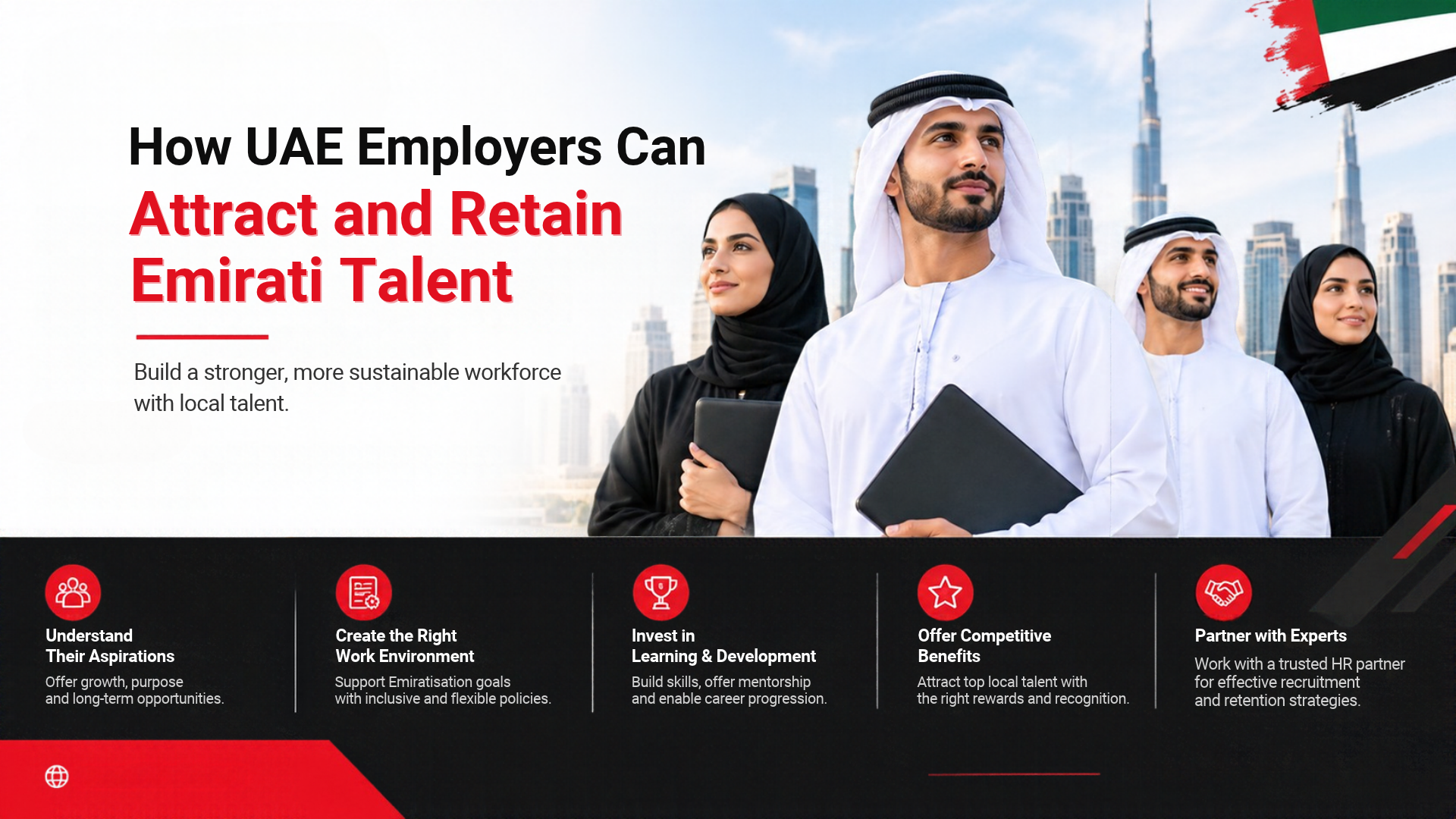
Hiring Emirati talent is now a core part of workforce planning for UAE businesses. But recruitment is only the beginning. If a new employee joins without clear responsibilities or real support from their manager, the placement rarely lasts. The employer is back to square one, and the employee loses the chance to build a career.
The better approach is to hire people whose skills fit the role, then create the conditions for them to succeed once they join. That means paying close attention to what the employee experiences day to day.
Start with a real business need
Before advertising a position, ask what work the business actually needs done, whether in customer service, finance, operations, technology or administration. Define the responsibilities, expected outcomes and required skills first, and decide on the job title last.
A vague role is harder to recruit for and harder for a new employee to understand. Avoid creating positions solely to meet a quota. A genuine role has defined duties, a manager who provides direction and the tools needed to do the work. The UAE Government’s guidance on employing Emiratis sets out the employer’s responsibilities, including providing a suitable workplace, the right tools and appropriate training.
Make the offer and expectations clear
Many placements fail because the job described at interview is not the job the employee finds on day one. Be clear about responsibilities, reporting lines, working arrangements, performance expectations and development opportunities.
Explain salary and benefits openly, and make sure employment contracts and records are handled correctly. Clear communication at the start prevents confusion later and builds trust from the first day.
Treat onboarding as part of recruitment
The first few weeks shape how a new employee sees the company. A brief introduction is rarely enough when the role involves unfamiliar systems or processes.
Give every new hire a named manager, a realistic first-month plan and access to the people and systems they need from day one. Set achievable priorities and schedule regular check-ins.
HR can coordinate induction, but it is usually the line manager who decides whether the employee gets meaningful work and useful feedback. Onboarding should be treated as part of every manager’s job, not something left to HR.
Give people a reason to develop and stay
Retention improves when employees can see how their work contributes to the business and where they can grow. Discuss the skills they can build, relevant training and the responsibilities they may take on over time.
Ask employees what helps them do their job and what gets in the way. Unclear priorities, limited system access or a lack of feedback can turn a promising placement into a frustrating experience.
Career development should be realistic. If a role has limited progression, say so honestly and discuss other ways to broaden skills or take on new responsibilities. Specific commitments build more trust than broad promises.
No single policy drives retention. Pay, line management, workload, commute, flexibility and a sense of progress can all affect whether someone stays. Employers do not need to solve everything at once, but they should find out why people leave and fix the problems that keep recurring.
Use Nafis and recruitment support wisely
Nafis, the federal programme run by the Emirati Talent Competitiveness Council, supports Emirati participation in the private sector. Employers should check the current programme criteria and official guidance before relying on any benefit or eligibility, as requirements can depend on both the employer’s and the employee’s circumstances.
A recruitment partner can help businesses identify suitable Emirati candidates, define roles and coordinate screening. It cannot replace the employer’s responsibility to offer genuine work and keep accurate records. The aim is not simply to fill a vacancy, but to place someone in a role where they can genuinely contribute.
Measure more than the hiring number
Hiring numbers tell only part of the story. Employers should also track whether new employees stay in their roles, complete onboarding, receive training and understand what is expected of them.
Check-ins at 30, 60 and 90 days can reveal issues while there is still time to address them. HR and line managers should review the feedback together and act on practical problems before they turn into a resignation.
If several new hires leave for the same reason, the problem may lie in the job description, the interview process, management support or the role itself, and finding more candidates will not fix it.
How Stallion HR Solutions can help
Stallion HR Solutions has supported UAE employers since 1996 and is licensed by the Ministry of Human Resources and Emiratisation (MOHRE). We help businesses with Emiratisation recruitment and wider workforce services: clarifying hiring requirements, sourcing qualified Emirati professionals and building recruitment around genuine vacancies and real business needs. Every engagement is tailored to the roles and services agreed with the client.
Final thoughts
Successful Emiratisation comes down to four things: a real position, clear expectations, structured onboarding and a manager who invests in the employee’s progress. Businesses that pay as much attention to what happens after hiring as to the hire itself give employees every reason to contribute and stay. Reviewing your Emiratisation plan or looking for support with Emirati talent recruitment? Contact Stallion HR Solutions to discuss your requirements.